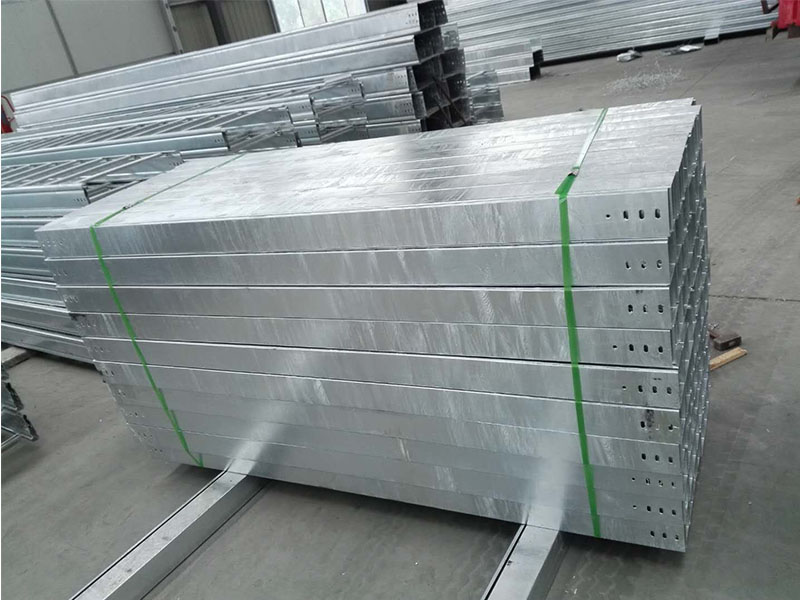
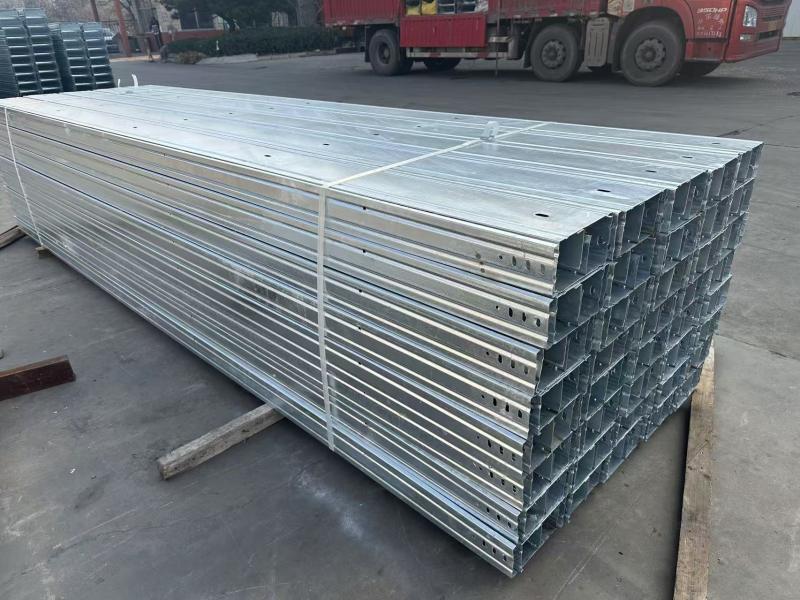
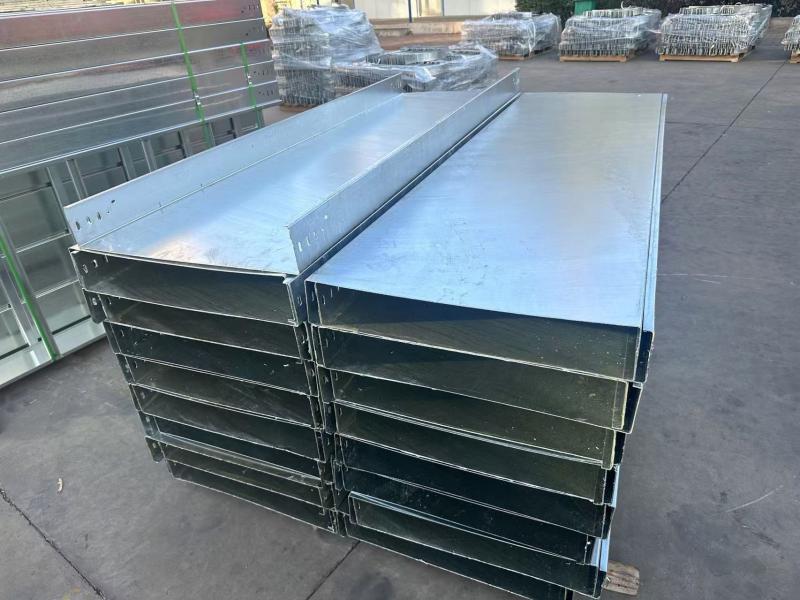
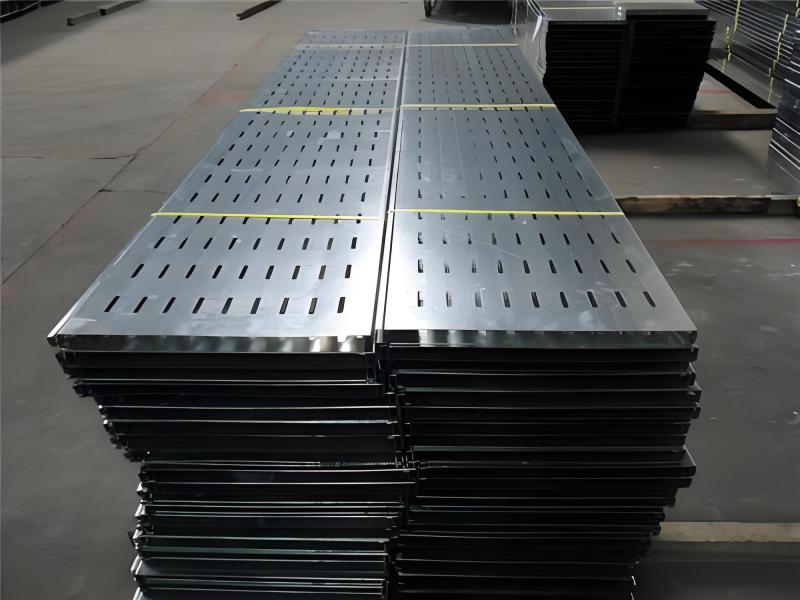
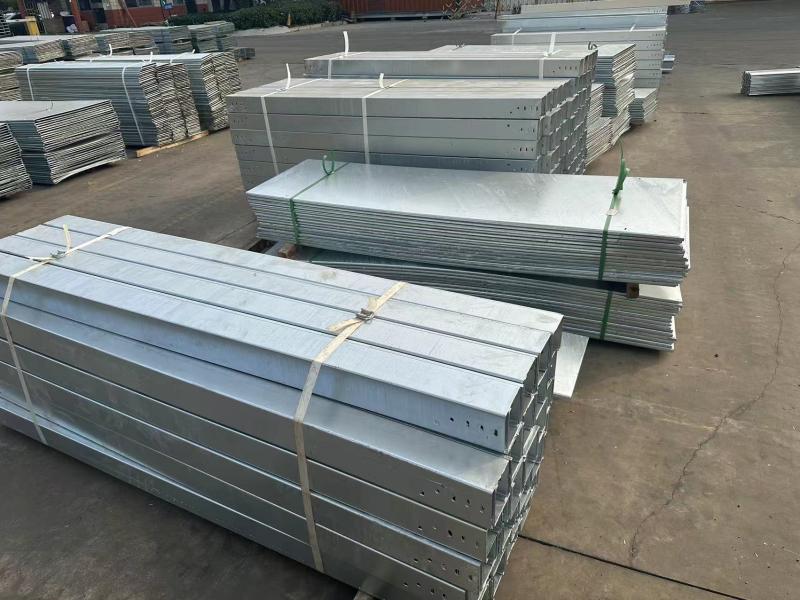
Perforated cable trays are a critical cable management solution that plays a crucial role in the layout, support, and protection of cables. Perforated cable trays are usually made of steel, which has good rigidity and a galvanized surface that can adapt to various strict environments. Perforated cable trays have been widely used in various fields and occasions such as engineering construction, industrial facilities, commercial residences, etc., and have become one of the preferred solutions for cable management.
JLH Electric is a professional manufacturer of cable trays with rich manufacturing experience and advanced production equipment, producing top-notch high-quality cable trays. Our main products include perforated cable trays, slotted cable trays, ladder cable trays, and various accessories for installation. We also provide customized services, including the size and thickness of cable trays.
In this article, we explain the application scenarios of perforated cable trays from the following levels:
- What Is Perforated Cable Tray?
- What Are The Main Types Of Perforated Cable Tray?
- What Are Advantages Of Perforated Cable Tray?
- How to choose the right perforated cable trays?
- Where are perforated cable trays used for?
- Conclusion
1.What Is Perforated Cable Tray?
Perforated cable trays, also known as tray type cable trays, are a systematic tool specifically designed for cable layout management. It is usually made of metal materials such as steel, stainless steel, aluminum alloy, and even special fiberglass materials. These materials endow the tray with a sturdy structure and strong load-bearing capacity, making it widely applicable in various fields such as construction engineering, industrial facilities, data centers, and commercial buildings. Its main function is to provide support and protection for cables, preventing them from being subjected to external physical impacts and damage.
The biggest design highlight of the tray is the hole at the bottom of its groove. These holes come in various shapes and sizes, which can effectively promote air circulation and help dissipate heat from the cables, ensuring their normal operation. In addition, there are various surface treatment processes for perforated cable trays, commonly including hot-dip galvanizing, electro galvanizing, and spray coating. At JLH, we have a government authorized ‘zinc pool’ that can provide different thicknesses of zinc layer processing according to different needs, while ensuring stable and reliable product quality.
Overall, perforated cable trays play a crucial role as an efficient cable management tool in industrial and commercial settings, and are an indispensable part of modern cable management.


2. What Are The Main Types Of Perforated Cable Tray?
2.1 Perforated Cable Tray
A perforated cable tray is a metal cable management device, characterized by multiple holes distributed at the bottom or side of the tray. These holes not only reduce the weight of the tray, but also significantly improve ventilation performance. This design makes cable installation and maintenance more convenient, while promoting air flow and effectively helping cable heat dissipation. Cable trays with openings are usually made of materials such as steel, aluminum alloy, or stainless steel, ensuring their high strength and long-term durability, making them an ideal choice for various cable layout needs.
2.2 Semi enclosed perforated cable tray
The semi enclosed perforated cable tray combines the advantages of open and enclosed cable trays. The bottom is designed as a perforated structure to optimize air circulation and heat dissipation performance, while the sides and top may be partially closed or completely open. This design provides additional protection for cables while maintaining good ventilation. The semi enclosed perforated cable tray can effectively prevent performance degradation caused by cable overheating, and is made of materials such as steel, aluminum alloy, or stainless steel to ensure its strength and durability during use, suitable for cable management needs in various environments.
2.3 Closed perforated cable tray
A closed perforated cable tray is a metal structure designed specifically for cable layout and management. It has perforations at the bottom and is completely enclosed around, which effectively prevents external factors such as dust, moisture, and debris from directly affecting the cable. Closed perforated cable trays are typically made of steel or aluminum alloy to ensure their sufficient strength and durability. In order to adapt to different environmental conditions, its surface will be treated with hot-dip galvanizing or spraying to enhance corrosion resistance and protective performance.
2.4 Adjustable perforated cable tray
Adjustable perforated cable tray is a specialized cable tray that combines ventilation, heat dissipation, and flexibility. The bottom is designed with perforations for easy ventilation and heat dissipation of the cable, while the top and sides are enclosed structures that can effectively protect the cable from external interference. This type of cable tray can be flexibly adjusted according to changes in cable layout, making it very suitable for various indoor cable laying environments. Its design not only meets the needs of cable heat dissipation, but also takes into account cable protection, making it an ideal choice for cable management.
3.What are the advantages of perforated cable trays?
3.1 Efficient maintenance and cleaning
The porous structure of perforated cable trays not only optimizes air circulation, but also significantly improves cleaning efficiency. This design allows cleaning personnel to directly flush the cables through the holes, simplifying the cleaning process and reducing maintenance time, thereby improving the efficiency of daily maintenance.
3.2 Excellent heat dissipation performance
The open design of perforated cable trays allows for free air flow, effectively dissipating the heat generated by the cables. This efficient heat exchange capability helps to reduce the operating temperature of cables and improve the safety and reliability of the entire electrical system. For high-power or high-density cabling systems, the design of perforated cable trays can significantly reduce heat accumulation and lower the risk of overheating.
3.3 Sturdy and Durable Structure
Perforated cable trays are usually made of sturdy metal materials such as steel, aluminum alloy, or stainless steel, which can not only withstand the weight of the cables, but also resist various external forces that may occur during handling and installation. Its design not only meets the heat dissipation requirements, but also enhances the overall stability and durability, ensuring that the tray maintains good performance during long-term use.
3.4 Excellent corrosion resistance
The surface of perforated cable trays is usually galvanized to form a zinc protective layer. This coating can effectively resist the erosion of moisture, rainwater, and chemicals, thereby extending the service life of the tray and maintaining its structural stability. This anti-corrosion performance enables perforated cable trays to maintain good performance in various harsh environments.
These characteristics make perforated cable trays an ideal choice for electrical installations, especially for applications that require high safety, reliability, and maintenance convenience.


4.How to choose the right perforated cable trays?
When selecting perforated cable trays, multiple factors such as cable quantity, diameter, installation environment, and cost need to be considered comprehensively. The following are several aspects that need to be focused on:
4.1 Dimensions and Bearing Capacity
Firstly, it is necessary to specify the number and size of cables to be accommodated to ensure that the selected perforated cable tray can fully accommodate and effectively manage the cables. This is a crucial step in the selection process.
4.2 Environmental conditions
Temperature: The applicable temperature range for perforated cable trays is -25 ° C to 60 ° C. Extreme temperatures beyond this range may affect the coating and material stability of the tray, thereby shortening its service life.
Humidity: To extend the service life of the tray, it is recommended to control the humidity of the usage environment below 95%. Although the surface of the tray is protected by a zinc layer, high humidity environments can still accelerate corrosion.
Corrosive environment: If the tray is exposed to a corrosive environment for a long time (such as chemicals, salt, or humid water vapor), it may cause corrosion and damage. Therefore, it is necessary to regularly inspect the environment and take special anti-corrosion measures (such as hot-dip galvanizing or spraying anti-corrosion coatings) to enhance the corrosion resistance of the tray.
Dust and debris: In a dusty environment, dust and debris may accumulate inside the tray, which can affect the performance and heat dissipation of the cable. Choosing a covered tray can improve sealing, reduce the accumulation of dust and debris, and regular cleaning and maintenance are also necessary.
4.3 Cost and Budget
Although the initial manufacturing cost of perforated cable trays may be high, their durability and low maintenance can save costs in long-term use and have a high cost-effectiveness. When choosing, not only should the purchase price be considered, but also the subsequent costs such as installation, maintenance, and possible replacement should be comprehensively considered.
5.Where are perforated cable trays used for?
5.1 Industrial premises
Perforated cable trays are widely used in industries such as petrochemicals, power, and manufacturing to support and manage power cables, control cables, and communication cables. Its ventilation design helps with cable heat dissipation and prevents safety hazards caused by high temperatures.
5.2 Commercial Buildings
In commercial buildings, perforated cable trays are commonly used under ceilings, walls, or floors to arrange computer network cables, telephone lines, etc. Its lightweight structure and excellent heat dissipation performance make it an ideal cable management solution.
5.3 Data Center
Perforated cable trays are suitable for data centers to manage large amounts of data cables and communication lines. Its open structure facilitates the installation and maintenance of cables, while providing good ventilation to ensure that cables operate within a safe temperature range.
5.4 Underground Facilities
Perforated cable trays can be used for cable laying and protection in underground buildings or tunnels. Its corrosion resistance and good ventilation performance enable it to be used for a long time in humid or harsh environments.
5.5 Light Industry and Office Space
Perforated cable trays are also suitable for light industry and office spaces, used for managing small cables and data lines. Its beautiful appearance and flexible installation method enable it to meet diverse wiring needs.
6.Conclusion
Perforated cable trays have become an ideal choice for modern cable management due to their durability, efficient heat dissipation, and easy maintenance. It is suitable for various scenarios such as industrial sites, commercial buildings, data centers, underground facilities, as well as light industry and office spaces. When making a choice, it is necessary to consider factors such as size, load-bearing capacity, environmental conditions, and cost comprehensively. JLH Electric, as a professional manufacturer, provides high-quality perforated cable trays and customized services to meet the needs of different projects, helping to ensure the safety and efficiency of cable management.