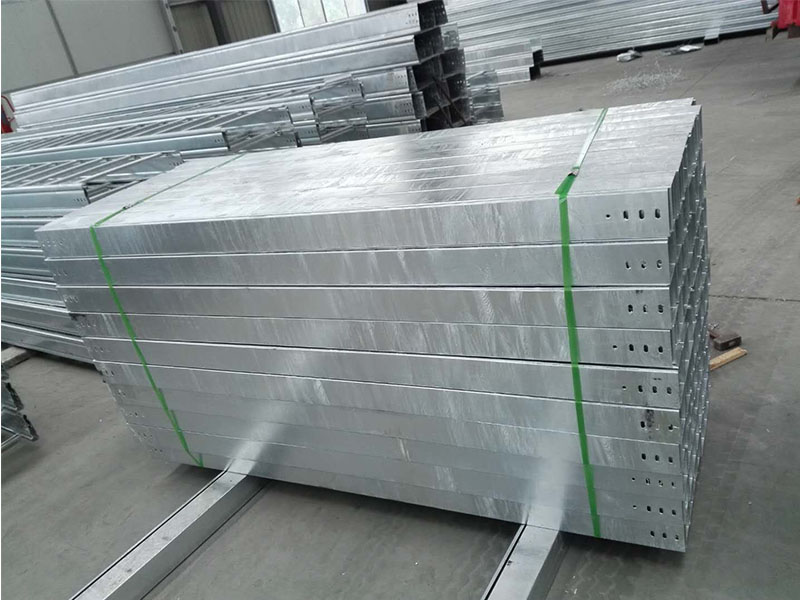
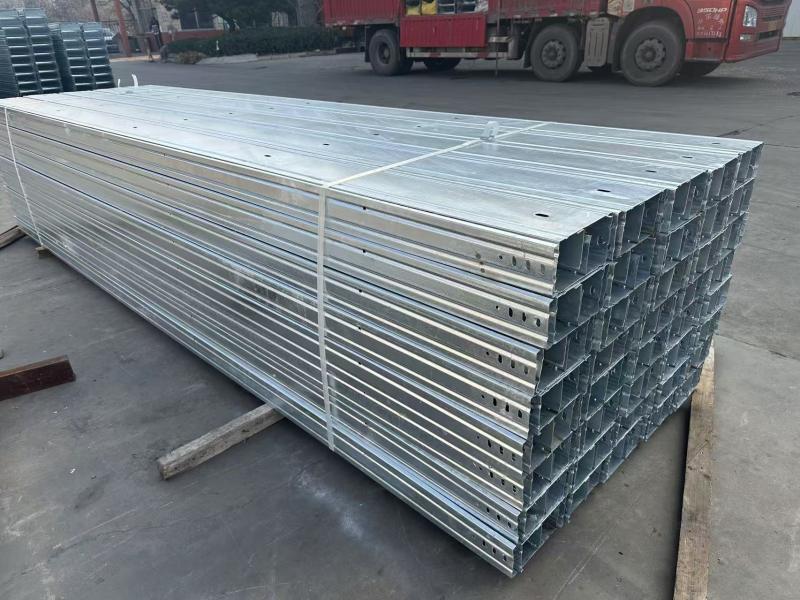
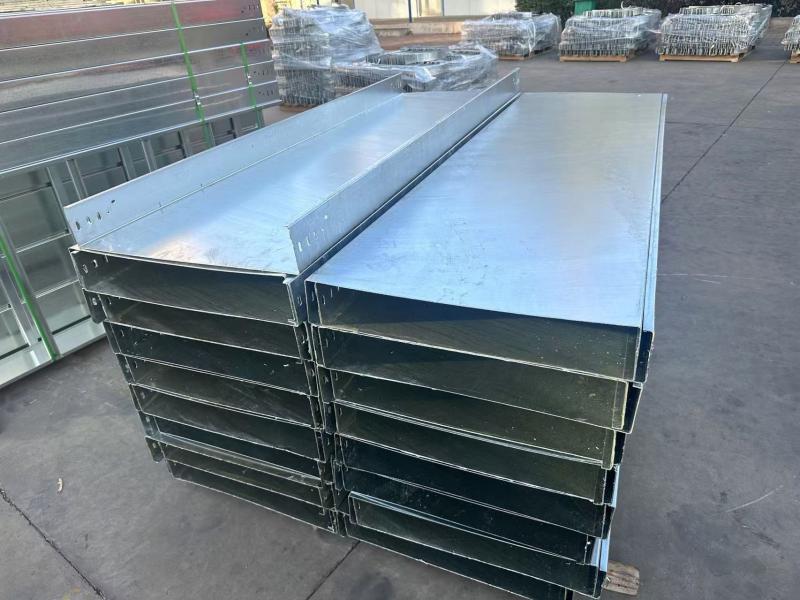
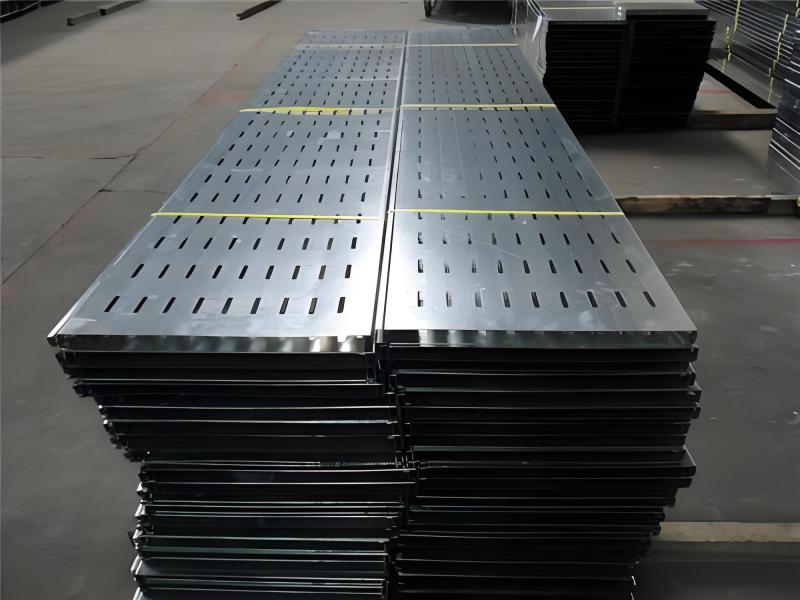
Electro-galvanized cable trunking is a systematic cable tray management solution for layout, support, protection, and management of cables, wires, and other cables. It is widely used in various engineering buildings, data centers, commercial and residential places.
Electro-galvanized cable trunkings are divided into two types according to the different surface galvanizing processes: Electro-galvanized cable trunking, HDG cable trunking. From the perspective of the surface zinc layer, their main differences are the thickness of the zinc layer after galvanizing, the consistency of the zinc coating surface, and the aesthetics.
As the largest cable tray manufacturer in China, JLH Electric always puts quality first, has rich manufacturing experience, and has a zinc pool authorized and approved by the government. Therefore, the quality of the galvanized trays produced is more stable and we have large-scale manufacturing capacity.
How to choose a suitable galvanized cable tray should be determined according to the needs of the specific project, including the requirements of the use environment for corrosion, cost and budget considerations, surface aesthetics requirements, etc. In this article, we mainly discuss the selection of galvanized cable trays from the following aspects:
- What is Electro-galvanized cable trunking?
- What is HDG Cable Trunking?
- What Are Differences Between Electro-galvanized cable trunking And HDG Cable trunking?
- How To Choose Between Electro-galvanized cable trunking And HDG Cable Trunking?
- Conclusion
1. What is Electro-galvanized cable trunking?
Electro-galvanized cable trunkings are usually made of pre-galvanized steel. They are a management solution for laying out, supporting, and protecting cables, wires, and other cables. They are widely used in various industrial, architectural, commercial, and residential places for their economic and efficient characteristics. Because there is a layer of zinc on its surface, it can effectively protect the internal cables from damage in humid and corrosive environments. At the same time, its own anti-rust and anti-corrosion capabilities are greatly enhanced, extending its lifespan.Here are the key advantages of using Galvanized Cable Trunking :
1.1 Uniform Zinc Coating
Steel is usually galvanized before forming the cable tray structure, so that the zinc coating adheres more evenly to the steel surface, including hard-to-reach areas such as corners and welds. Therefore, it protects more areas from corrosion and provides more comprehensive protection.
1.2 Aesthetic Appearance
Because the steel plate or steel is galvanized before the cable tray is formed, compared with HDG cable trunking, the surface coating of the Electro-galvanized cable trunking after forming is more uniform and consistent, the surface is smoother, and it looks very beautiful. For environments with high requirements on the appearance of the cable tray system, such as shopping malls, residential areas, etc., it is a choice worth considering.
1.3 Cost-Effectiveness
Compared with galvanizing after forming, this pre-galvanizing process is more cost-effective. Therefore, for users who have more cost considerations, this is a very good cost-effective choice.


3.What is HDG Cable Trunking?
HDG cable trunking is also called Hot-dip galvanized cable tray which is a systematic cable tray solution system for supporting and protecting cables. This process forms a layer of zinc on the surface of the steel by immersing the prepared steel in a molten zinc pool to form a protective coating, which has better corrosion resistance than pre-galvanized cable trunking. Hot-dip galvanized technology makes its coating thicker and more uniform, so its lifespan is longer and can be widely used in various harsh outdoor environments, such as high corrosion, humid environment, environment with chemical contact, etc., such as construction projects, infrastructure, chemical plants, power plants, etc.Here are the key advantages of using Galvanized Cable Trunking:
3.1 Strong Corrosion Resistance
After the hot-dip galvanizing process, a thicker zinc layer is formed on the surface of the steel, so its corrosion resistance is greatly improved. It can be directly exposed to harsh environments with high corrosion such as high temperature and chemicals to avoid corrosion and rust, while enhancing its own lifespan, with good cost-effectiveness.
3.2 High Strength and Durability
The raw material of HDG cable trunking is Q235 steel, so it has a strong structure and high strength. In addition, the thick zinc layer formed by the hot-dip galvanizing process makes it resistant to physical impact, bending and deformation. At the same time, it has strong corrosion resistance, long life span and high durability. HDG cable trunking has excellent load-bearing capacity and is widely used in the support and protection of large cables, laying layout, and management. It is a highly efficient systematic cable tray solution.
3.3 High Cost-Effectiveness
Compared with cable trays made of other materials such as aluminum alloy and stainless steel, HDG cable trunking is a more economical alternative. At the same time, its thicker zinc layer on the surface improves its anti-rust and anti-corrosion capabilities, longer lifespan and higher economic benefits.
4.What Are Differences Between Electro-galvanized cable trunking And HDG Cable Trunking?
Electro-galvanized cable trunking,HDG cable trunking have the same raw materials, similar design and function, but there are some differences between them, which directly determine that they are suitable for different working environments. They play different functions. The following summarizes are the main differences between them:
4.1 Galvanizing Time
Electro-galvanized cable trunking is galvanized before manufacturing, while HDG cable trunking is galvanized after manufacturing, which is their main difference.
4.2 Zinc Layer Consistency
Because the Electro-galvanized cable trunking is galvanized before manufacturing, the zinc layer spraying on the surface of the finished product is more uniform, even at the welds and corners, there is a uniform coating distribution. The distribution of the zinc layer of HDG cable trunking is not so consistent, especially at the welds and corners.
4.3 Aesthetic Appearance
- Since the galvanizing process of Electro-galvanized cable trunking is controllable, the surface zinc layer of the finished product is sprayed more uniformly, smoother and more beautiful.
- Although the surface zinc layer of HDG cable trunking is thicker than Electro-galvanized cable trunking ‘s, the thickness is uneven, and the surface may have textures and unevenness, but it depends on the manufacturing conditions after galvanizing.
4.4 Corrosion Resistance
- Due to different galvanizing conditions, Electro-galvanized cable trunking have a thinner zinc layer, usually less than 45μm, so the corrosion resistance is general, and can only resist weaker corrosion environments, with short-term corrosion resistance. The zinc layer of HDG cable trunking is thicker, usually more than 65μm, so it has stronger corrosion resistance and can adapt to stronger corrosion environments, such as chemical plants, oil and power plants, and cable management in coastal areas.
- In short, these two cable trays have their own advantages and applicable scenarios, but the final choice still depends on the specific needs of the project, especially the requirements for corrosion resistance and the budget constraints of funds.


4.How To Choose Between Electro-galvanized cable trunking And HDG Cable Trunking?
4.1 Corrosion Resistance
- Corrosion resistance is the first factor to be considered, which directly determines whether the cable trunking can be used in the environment you require. As mentioned before, HDG cable trunking has thicker zinc layers, stronger corrosion resistance, and longer lifespan, so it is more suitable for cable management in the chemical, petroleum industry and coastal areas.
- The Electro-galvanized cable trunking has a thinner zinc layer and is suitable for use in places with low environmental requirements.
4.2 Budget and Cost Considerations
The manufacturing process of HDG cable trunking makes the surface coating thicker. Although the initial manufacturing cost is high, it almost does not require maintenance in the later stage, saving the subsequent maintenance costs and time, so it is more cost-effective. If the budget is limited and the use environment is not harsh, Electro-galvanized cable trunking is a better choice.
4.3 Aesthetic Appearance
In terms of appearance, the Electro-galvanized cable trunking has a smooth surface and a uniform coating, so its appearance is more attractive and beautiful, and it is suitable for using in scenes with requirements for interior decoration.
5. Conclusion
This article starts from how to choose galvanized cable trunking, and introduces two types of cable trunking from the perspective of galvanizing process, product features, applicable environment and scenarios, etc., to help you systematically understand the advantages and disadvantages of each cable trunking, and how to choose the right cable trunking according to project needs, such as: corrosion resistance requirements, aesthetic appearance requirements, budget and cost requirements, etc. I believe this will definitely help you choose the right cable trunking.
If your project has low requirements for corrosion resistance and considers cost factors, then Electro-galvanized cable trunking meets your requirements. If your project requires high corrosion resistance, and the installation environment is outdoors, coastal, and directly exposed to chemical contact environments, then HDG cable trunking is your first choice.
JLH Electric is a professional cable tray manufacturer integrating R&D, production, and manufacturing. We have modern production lines, professional R&D teams and after-sales services. We only provide you with high-quality cable trays with competitive prices. If you are interested in our products or other aspects, please feel free to contact us, and we will be happy to answer your questions.